Do it right from day one and the rest gets easier
You're not one for winging it. You want the budget nailed, the sequence mapped, and the risks known before a single spade goes in the ground. Good — that's exactly how the best self-builds are run. Let me help you build a plan that holds up.
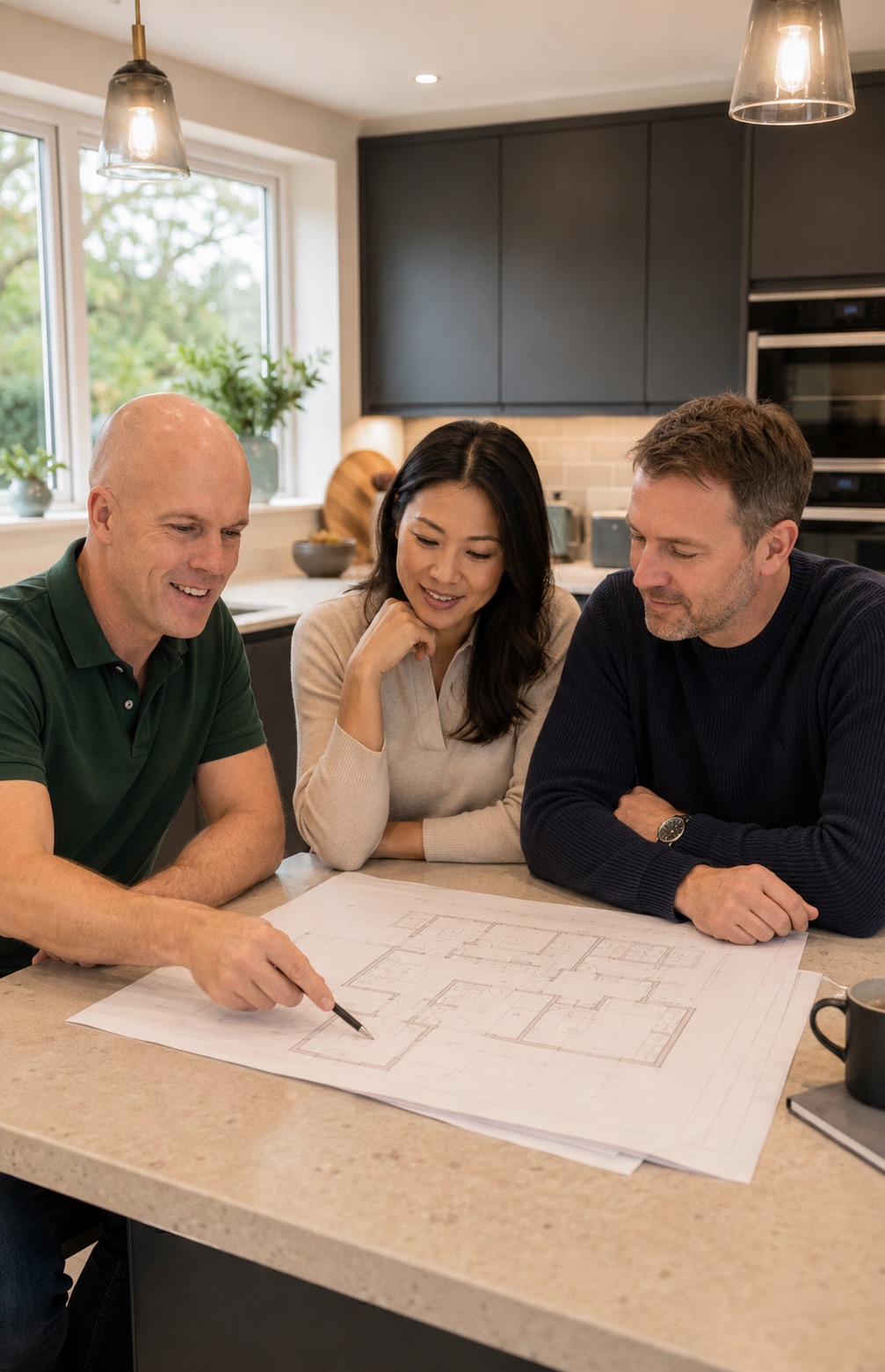
The projects that run smoothly are the ones that were planned properly
Overspends and delays are rarely bad luck. They're almost always a decision made too late, in the wrong order, without the full picture. Front-load the thinking and you take most of the risk out before it can cost you.
Getting the foundations right — on paper first
Planning it properly means having clear, honest answers to the things that trip people up:
A budget that includes everything
Not just the build — the contingencies, the fees, the finishes, the surprises. A real number you can trust.
The right sequence
What happens when, who needs to be booked ahead, and what each decision depends on.
The right people, agreed properly
How to choose your trades and suppliers and what to lock down in writing before you start.
A way to stay on track
Simple checkpoints so you always know whether you're on budget and on time.
A solid budget is the backbone of the whole plan. Start there.
Your plan, pressure-tested by someone who's done it
I'll work through your plan with you and stress-test it against what actually happens on a real build — the things that look fine on paper and bite later. You'll break ground knowing your numbers, your order and your risks. That's the confidence that comes from planning it properly.
Plan it so it holds up
Two easy first steps, both free and no-obligation.